
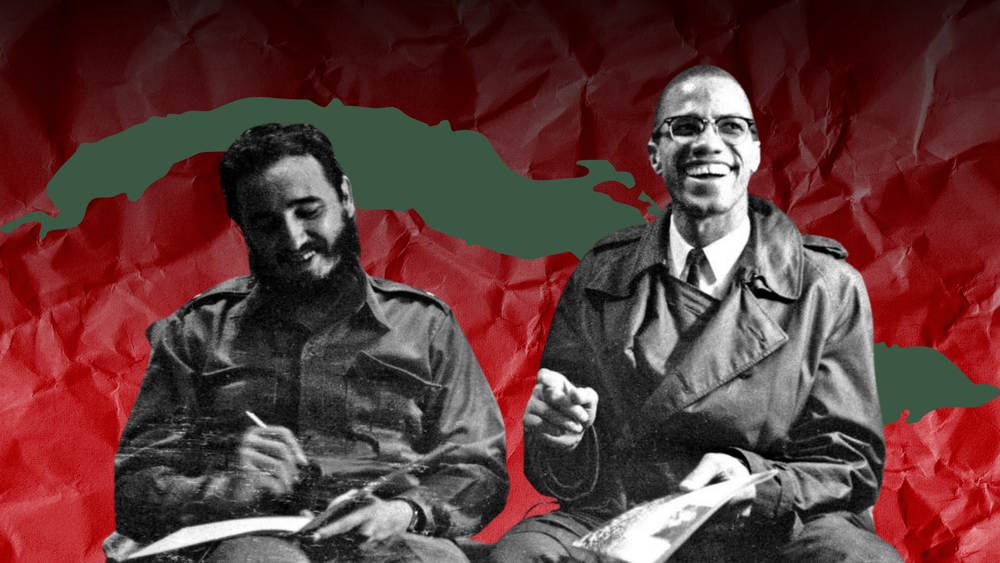
At a conference honoring Malcolm X in 1990, the Zanzibari Marxist revolutionary Abdulrahman Babu explained that, throughout the twentieth century, when the U.S. government targeted “communism,” it was likewise (and perhaps more so) targeting national liberation struggles and self-determination in the Third World. “For instance,” he explained, “although American imperialism was supposedly fighting communism, throughout this period you’d find that American presidents—every American President—had to have a Third-World leader as a villain. They never fought the Russians.” For example, Harry S. Truman targeted the North Korean Leader Kim Il Sung, John F. Kennedy villainized Fidel Castro, and Ronald Regan Reagan targeted Muammar Gaddafi. At the time of his speech, George H.W. Bush had made Saddam Hussein public enemy number one. Babu’s analysis of Kennedy targeting Cuba and Castro, not the Russians, speaks directly to this moment. The July 20, 2026 report, “Cuba: The Capital of 21st Century Communism,” claims: “Even then, Castro’s Marxism was radically different from its Soviet counterpart. It was permeated by something new: The doctrine of tercermundismo (‘Third Worldism’).” (p. 9) This appeal to the Global South made the “Castro ideological project” so dangerous that, according to the State Department, it continues to be the key existential threat to the United States in the Western hemisphere today. The report asserts, “Cuban communism helped shape a distinct and uniquely dangerous form of revolutionary leftism—built around racial, social and even civilizational grievances rather than economic class conflict—which would go on to instantiate itself as the dominant genre of left-wing radicalism around the globe.” (p. 6)
Babu’s speech further illuminates why the U.S. government continues to construct Cuba as a pre-eminent threat to the most powerful and destructive empire in world history:
But is this accidental? Is this accidental or is it a part of U.S. policy necessitated by the significance of Third World countries in relation to the United States? Not because Third World countries have nuclear weapons, but because the United States contains a large population from Third World countries in its own borders, more than any other country in the Western World.
And this population is never reflected positively in its foreign policy, it is always reflected negatively in that foreign policy. The United States has a positive policy toward Poland, it has a positive policy toward Israel, because they reflect an internal situation. No foreign policy can be viable if it does not reflect internal needs—the needs of the people that it contains. And U.S. foreign policy reflects all these needs except the needs of the Black people of this country.
In other words, there is a direct connection between the U.S. government’s oppression of racialized and colonized peoples within its own borders, its violent foreign policy objectives, and the repression of any state, organization, and individual that materially and ideologically opposes both. This connection means that internationalism and anti-imperialist solidarity, which encourage national liberation and self-determination are considered because they fundamentally challenge U.S. power. More than this, Black liberation and self-determination are deemed especially dangerous given the long history and enduring reality of superexploitation and domination. To discredit and criminalize radical struggles for Black freedom, the U.S. state characterizes these movements, organizations, and ideas as foreign-inspired, the result of outside agitation, and threatening to national security—especially when there is real international connections and support.
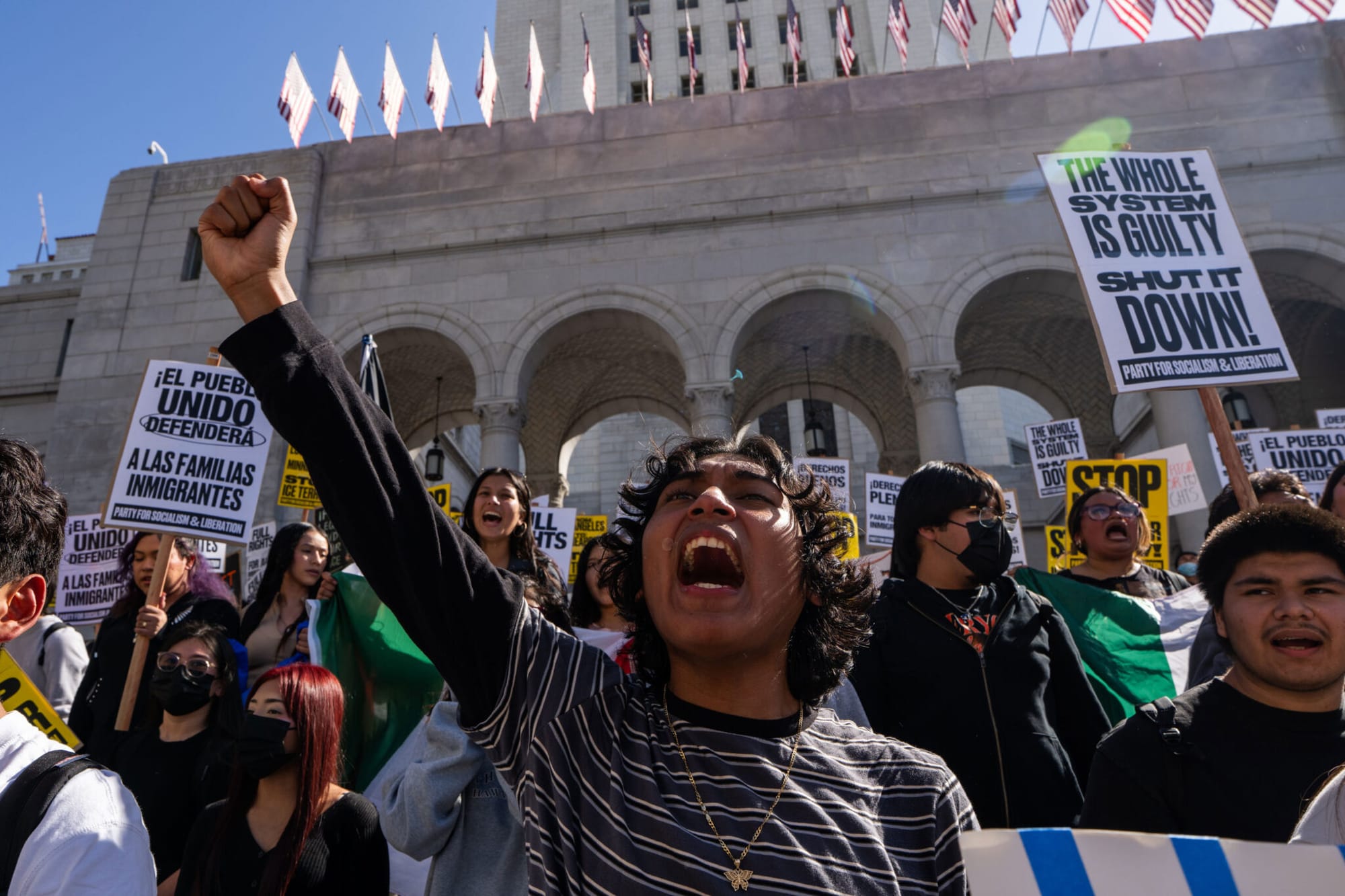
It is important to analyze “Cuba: Capital of 21st Century Communism” in the context of our current Red Scare. As I explain in my book Black Scare/Red Scare: Theorizing Capitalist Racism in the United States, “Red Scare” can be understood as “the criminalization and condemnation of anticapitalist ideas, politics, and/or practices through discourses of radical takeover, infiltration, and disruption of the American way of life to maintain a society dominated by a capitalist elite and organized along race and class lines.” (p. 5) Red Scares are facilitated through anticommunist governance, which is administered by all three branches of the government at the federal, state, and local levels. This particular Red Scare is spearheaded by the Executive Branch. Anticommunist governance fuses “public authority” and “societal self- regulation” to penalize, regulate, censure, and criminalize ideas and beliefs that challenge racial oppression, economic inequality, and class antagonism by labeling them “communist.” Public authority manifests in things like legislation, court rulings, presidential executive orders, security initiatives by government agencies, and a deluge of federal and state congressional committees. The Cuba Document, NSPM-7, the Prairieland 9 convictions, and the subpoena of the People’s Forum and BT News before the House of Representatives Ways and Means Committee are recent examples of this public authority. “Societal self- regulation” can be understood as societal self-policing brought on by the fear that personal thoughts, beliefs, and opinions will result in disciplining given an atmosphere that had been “poisoned” through public authority. It is a result of anxiety about losing jobs, homes, relationships, and a sense of belonging. Societal self-regulation is effectively the genuflection to the status quo lest one be exiled, excluded, criminalized, physically attacked, or worse. Likewise, those with access to power—including landlords, private employers, book publishers, and mass media workers—are conditioned by and through anticommunism to be hostile to and prejudiced against communists, militants, and agitators and to act against them. An example of this is the media, colleges and universities, and civic organizations condemning or refusing to support radical and progressive developments, from the student intifada to anti-ICE protests to recent DSA electoral wins.
Below is an analysis of six passages from the Cuba report, with a particular focus on the state’s weaponization of ideology, affiliation, and internationalism. These excerpts illuminate the logic, objectives, and implications of the U.S. government’s full-throated assault on radical and progressive movements generally, and Black radical organizing particularly.
“Since the 1960s, the regime has served as the beating heart of a new and distinct kind of Marxism, forged around an overriding resentment and fundamental hatred of the United States and the broader West. The Cubans devoted themselves to recruiting, cultivating and mobilizing a global coalition of activists, intellectuals, and political groups around this cause, building a sprawling revolutionary network that shaped a disproportionate share of America’s most famous and influential extremist movements, from the Black Panthers and the Weather Underground through to Antifa… Cuban communism helped shape a distinct and uniquely dangerous form of revolutionary leftism—built around racial, social and even civilizational grievances rather than economic class conflict—which would go on to instantiate itself as the dominant genre of left-wing radicalism around the globe.” (pp. 5-6)
First, it is important to note the way that Cuba’s “distinctive” Marxism allows the state to paint an unbroken lineage of “extremism” from the 1960s to today, tracing loose networks like antifa and movements like Black Lives Matter to “Cuban-backed” influence of the Black Panthers and the Weather Underground. Change over time, ideological distinction, interim movements (e.g., anti-apartheid, anti-Iraq War), and the specific employment of internationalism don’t matter because omnipresent Cuban subversion is the glue holding these things together. Time and history are being manipulated to serve the objective of repression. Something else to note is that “racial, social, and civilizational grievance” make the focus on class conflict even more dangerous. This means that organizing against white supremacy, inequality, indignity, exploitation, and Western imperialism and domination make the critique of economic exploitation even more potent. Here, we see a convergence between white leftists who claim any focus on race and other ascriptive categories undermine the class struggle, and claims by the state that these foci are uniquely dangerous.
- “In 1995, Barack Obama launched his first-ever run for political office in the living room of Dohrn and her husband, Bill Ayers—another co-founder of the Weather Underground who would go on to become Professor of Education at University of Illinois at Chicago.” (p. 46)
Many people were incredulous about the inclusion of Barack Obama in this report given that he has been one of the most ardent servants of U.S. empire through mass deportation, advancing drone warfare, crushing protests in Ferguson, denigrating poor Black folks, and more. However, attacking Obama highlights two important Red Scare tactics. The first is guilt by association: because Obama was politically affiliated with a former member of the weather underground, he automatically becomes suspect. The second is the chain of association that legitimates surveillance and repression. Because Ayers, “subversive” given his former ties, is a professor, this confirms that U.S. colleges and universities are hotbeds of radical indoctrination and should therefore be surveilled, disciplined, defunded, and/or controlled by rightwing interests. In this chain of association, Obama, the Democratic Party, higher education, and current and former activists are all part of a cabal of Cuban-backed extremists that must be stamped out at any cost.
- “The second, Karen Bass, is the current Los Angeles mayor. Bass was a leading Venceremos organizer in southern California and visited Cuba as frequently as every six months, according to an interview she gave in 1996. She would go on to serve in Congress, where she chaired the Congressional Black Caucus, and was widely considered to be one of the finalists for then-candidate Joe Biden’s vice-presidential pick in the 2020 election.” (pp. 46-47)
Like Barack Obama, the addition of Karen Bass defied logic for some, given for example, her current appeasement of Zionists and capitulation to police unions. However, when it comes to the Red Scare, there is no statute of limitations. Stated differently, affiliations deemed anathema to the state will always follow and be used against you. More concretely, Karen Bass’s involvement in the Venceremos brigade 30 years ago means that she continues to be seen as a Cuba-linked subversive even as some of the politics she supports are directly antithetical to the objectives of the Cuban revolution. When it comes to the Red Scare logics, it doesn’t matter if, yesterday or twenty years ago, you were a member of, donated to, attended a meeting for, or received a newsletter from a radical organization; you will still be caught up in the antiradical dragnet.
- “This, too, was an intentional strategy of Cuban foreign policy towards America: Since the 1960s, Havana has served as a revolutionary capital for black nationalists, separatists, and militants. No radical movement in the United States has been more intimately linked to—or aided by—the Cuban regime… Cuba played a foundational role in the formation of Black Power ideology. Throughout both the twentieth and twenty-first century, the regime has sought to cultivate a fifth column of American black extremists through appeals to international racial solidarity—framing both Cubans and African-Americans as oppressed Third World peoples arrayed against the common enemy of white America… The relationship between American black radicals and Cuba sources back to the founding ideology of the Cuban regime itself. From the first years of the revolution, Castro sought to identify his internationalist struggle against American power from abroad with the black struggle against American power from within.” (pp. 52, 54)
Given the intimate link between Red Scares and Black Scares, it is no surprise that a document fearmongering about communism would have a whole chapter dedicated to “racial revolution” that particularly focuses on Black radicalism. Its objective is to discredit and distort the motives of Black organizing. A historical lie about Black people is that we are satisfied about our conditions until we’re riled up by “outside agitators” or “foreign influence.” This myth is particularly pernicious because it not only rationalizes Black impoverishment and marginalization but contends that we are perfectly content with material lack so nothing needs to be done to improve our lives. The related assumption is that we are too stupid, ignorant, lazy, irrational, savage, or cowardly to identify our oppression for ourselves and to do something about it. Furthermore, the report attempts to discredit Cuba’s real solidarity with Black Americans by making it appear as a cynical plot to destabilize the United States rather than an authentic political relationship forged through the mutual identification of U.S. imperialism as the greatest menace to racialized and colonized people—and mutual commitment to fight against it.
- “Cuba played a foundational role in the formation of Black Power ideology. Throughout both the twentieth and twenty-first century, the regime has sought to cultivate a fifth column of American black extremists through appeals to international racial solidarity—framing both Cubans and African-Americans as oppressed Third World peoples arrayed against the common enemy of white America.” (p. 53)
So much of the report’s attack on Cuba is aimed at the strong connection the socialist nation has forged with Black people because it aims to discredit both. The Black demand for power is construed as a foreign-backed extremist plot as opposed to a rational, organized response to the long history of superexploitation and racial violence. This mischaracterization is meant to both discredit such movements, but to force people to moderate their demands out of fear of being punished as an enemy of the US state. Likewise, the ignorant and ahistorical claim that Black internationalism is attributable to the Cuban revolution erases the very long history of Black people reaching beyond U.S. borders to extend their cartography of struggle. The movements to return to Africa or relocate to places beyond the reach of trans-Atlantic enslavement, identification with the Japanese prior to World War II, the Haitian and Bolshevik Revolutions, and the defense of Abyssinia against invasion by Italian fascists are just a few examples of Black Internationalism that predated 1959. To this can be added the long history of Pan-Africanism dating back to the nineteenth century. The purpose of distorting and erasing this history is to deny Black agency and to paint Cuba as the progenitor of Black radical activism and organizing. As William Patterson put it, “Historical lies have a place in the program of those who would destroy the very essence of democracy. Only those who are enemies of mankind can seek to deny to nationals of their own country a record of the fruits of their sweat and blood because those nationals bear a different color or worship at a different shrine. Such is the course of savages ruling in a modern exploitative society.”
- “In mainstream academic circles today, the term “black radicalism” frequently encompasses various different sub-genres—black nationalism, Pan-Africanism, Black Marxism, and broader Third Worldist movements—but each of these strains can be traced back to the same ideological innovations pioneered by Carmichael and his counterparts: a militant and separatist racial identity that rejected the whole of the existing American order, and advocated a struggle for black “self-determination” by any means necessary. Organizations like the SNCC served as early and foundational proponents of this political current—which continues to shape and influence American politics and culture to this day.” (p. 58)
The Cuba report’s caricature of Black radicalism has several effects. First, irrespective of ideology or political objective, Black resistance is presented as effectively the same. It follows very closely, then, that there is no functional difference between, for example, convening a conference on reparations for Black folks and expropriating a bank to fund Black liberation. In effect, this denial of diversity of thought and action homogenizes, and thus more effectively targets and criminalizes, Black radicalism. Second, discrediting Black nationalism and everything to its left leaves Black liberalism as the only progressive option, thereby ensuring that Black struggle will be, at best, impotent and subservient to U.S. imperialism. Third, reducing Black “ideological innovations” and “political currents” to the machinations of a tiny handful of externally-oriented individuals and organizations provides the basis for an array of repressive tactics. It makes it easier to claim that Black radicalism is authoritarian and anti-democratic and thereby susceptible to foreign influence. It encourages the utilization of legal instruments like RICO to indict many people simultaneously. And, it establishes a “network” of (Black identity) extremism upon which to apply domestic terrorism enhancements. Finally, misattributing this wide array of Black radical thought to a single individual and organization—Kwame Ture (Stokely Carmichael) and the Student Non-Violent Coordinating Committee—imposes a top-down, leader-centered understanding of organizations, movements, and knowledge production, and thus ignores the central role of the people and their lived conditions as the basis for building and sustaining organizations and movements. It is not “militant and separatist racial identity” that produces rejection of the American order, but rather rejection by the American order that produces militant and separatist racial identity. Likewise, the struggle for Black self-determination by any means necessary is a direct consequence of ongoing state domination by every means available.
In the context of the Red Scare, documents like “Cuba: Capital of 21st Century Communism” will build on NSPM-7 to both rationalize and create the discursive conditions for the United States’ increasingly repressive domestic and foreign policies. Anti-imperialist knowledge workers in service to Black liberation are responsible for making sense of how these government reports work to circumscribe the political objectives and tactics, practices and affiliations, of the left generally, and Black radicals particularly. Understanding the “what” and “so what” is the basis for developing a durable and effective defense strategy.
Dr. Charisse Burden-Stelly is a Black Studies scholar of political theory, political economy, intellectual history, and political and historical sociology. Her published work includes Black Scare/Red Scare: Theorizing Capitalist Racism in the United States andW.E.B. Du Bois: A Life in American History. She is also the co-editor of Organize, Fight, Win: Black Communist Women’s Political Writings and of Reproducing Domination: On the Caribbean and the Postcolonial State
Finder Dr. CBS on Substack