Alfonso Fanjul, the Cuban-American billionaire who turned his back on his people's socialist project to build one of the world's largest and most exploitative sugar empires, died earlier this month on August 3rd.
The coming weeks will undoubtedly bring a wave of sanitized memorials. Western headlines will paint him as a titan of Florida’s sugar industry, a philanthropist, and a political power broker. They will pedestalize him and speak of his resilience after Fidel Castro's revolution seized his family's properties as an example we should strive to imitate. But digging deeper into the bloodshed of his legacy, we find nothing to applaud. Instead we must consider, "Who, without capitalization, are we idolizing?"
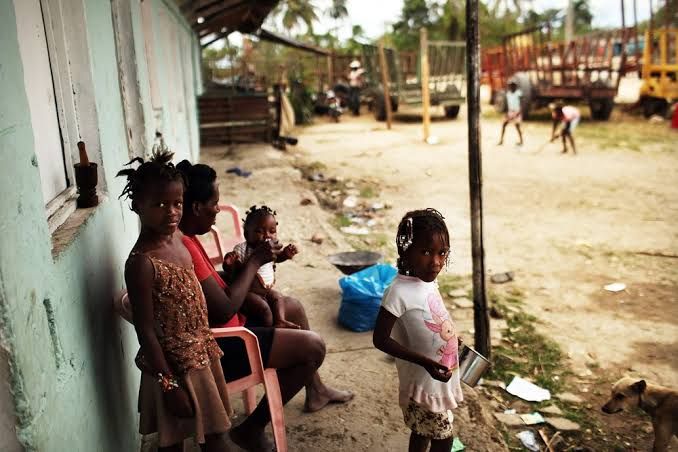
On the Eastern part of the Republic of Haiti known as the Dominican Republic, behind the facade of an island oasis and Caribbean culture, lies a shameful reality. Bateyes are corporate-owned sugar cane fields where collecting one ton of sugar cane gets you $4 USD. According to the United Nations Development Programme, there are over 200,000 Haitian migrants and Dominicans of Haitian descent living in as many as 425 bateyes across the Dominican Republic.
In 2013, a fascist ruling brought the nation back to the time of Dictator Rafael Trujillo, revoking birthright citizenship from hundreds of thousands of Dominicans. Anyone having descendancy from the West side of the singular island dating back to 1929, was suddenly left stateless.
So what came to be of those Indigenous citizens left stateless due to the racism and anti-haitinismo that fails to subside on the Island? The billion dollar sugar industry of the island saw this ruling as an opportunity to do capitalism's favorite pastime - exploit Black and Brown poor people. These super-exploited semi-enslaved families in the bateyes, who do not have the ability to roam the island or go to the beach like most tourists, who now find themselves stateless and lacking documentation, cannot leave these fields.
The term "batey" originally referred to the central courtyards of Spanish colonial haciendas where enslaved Africans were gathered. Today, these compounds serve as prison-like housing for Haitian "cañeros" (sugar cane cutters) and their families. Life in the bateyes is a masterclass in deprivation where many residents lack running water, electricity, or sewage systems. They rely on contaminated well water which leads to rampant disease among residents while they labor for 12 to 14 hour days in brutal heat for sometimes less than $2 a day.
The Dominican Republic’s largest sugar producer, Central Romana, owned by Alfonso Fanjul and his family, issued a statement claiming that “Central Romana takes pride in its reputation for ethical business practices,” which is a complete contrast to what's really going on. Despite being the backbone of their sugar production, these workers are treated as disposable. They are vulnerable to arbitrary eviction, wage theft, and a relentless campaign of deportation raids that are conducted by the Dominican state to crush any chance of organizing for better conditions. Several investigative reports have documented the conditions in these camps mirror the worst aspects of chattel slavery updated for this neoliberal era. This is not an accident. It is a business model and further punishment for the first Black Nation who dared to free itself, Haiti.
The Fanjul business model is a replica of the plantation simply replacing the white slaveholders of the past with greedy capitalists in suits while maintaining a hierarchy that exploits Black Caribbean labor. Journalistic investigations by Reveal News, Mother Jones, and others have repeatedly alleged forced labor, child labor, and hazardous working conditions linked especially to Central Romana. Yet, the Fanjuls have consistently denied wrongdoing pointing out superficial philanthropic efforts while their primary investment has been in political access.
This even tested the reins of America's depravity. In 2021, Democratic lawmakers, pressured by human rights and labor union activists, called on President Joe Biden to investigate the mistreatment of sugar cane workers in the Dominican Republic, saying inhumane conditions must not be tolerated in the U.S. supply chain. Two years later in 2023, reports indicated federal agents under Biden's genocidal administration were investigating Central Romana, potentially leading to criminal charges. The Biden administration even went as far as to issue a ban on Central Romana sugar imports in 2022 after finding evidence of forced labor. However, in March 2025, the Trump administration quietly rescinded this ban as a thank you for hefty donations to Trump's fundraising committees in all three elections and super PACs.
This failure to take accountability for the inhumane treatment of cañeros with the hopes it gets swept under the rug should lead us to take action. What can we do? Hit them where it hurts: the only thing that actually matters to a capitalist is their capital. A boycott of all products that get their sugar from Central Romana is urgently needed to put targeted pressure on this fascist conglomerate in Alfonso Fanjul’s name. Boycott the major food manufacturers involved: The Hershey Company, Coca-Cola, PepsiCo, General Mills, Kellogg's, Mars. It is our duty to take a stand, show solidarity and Boycott!
Learn more about bateyes and this modern form of slavery