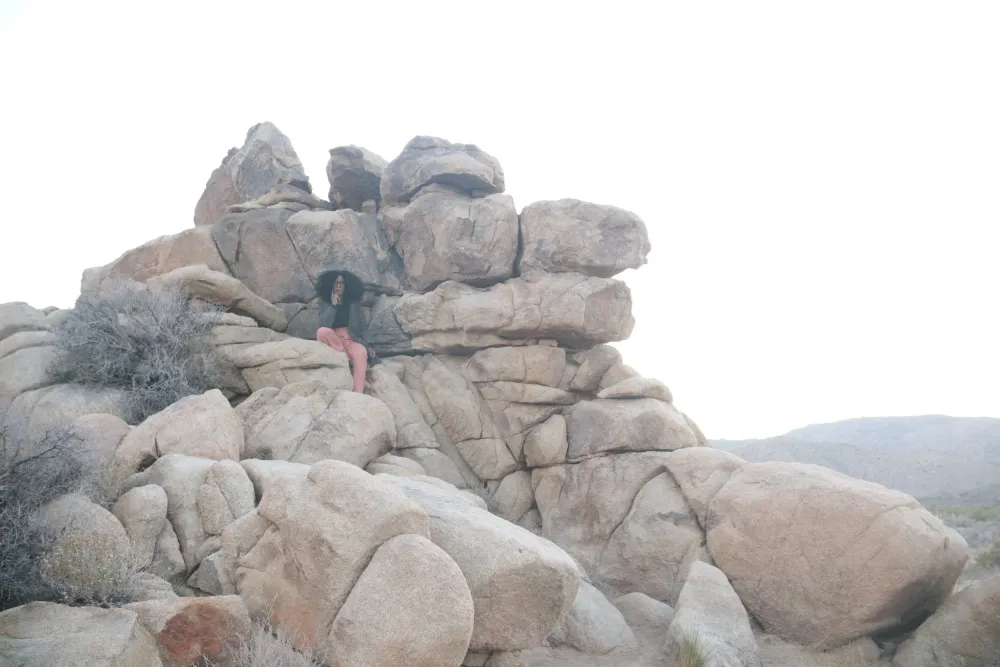
Sharing stories about their lives and experiences in political organizing, narrators contribute to a collective memory, highlighting the similarities and differences in the landscape today and how they have remained committed to movement work over decades.
Introduction
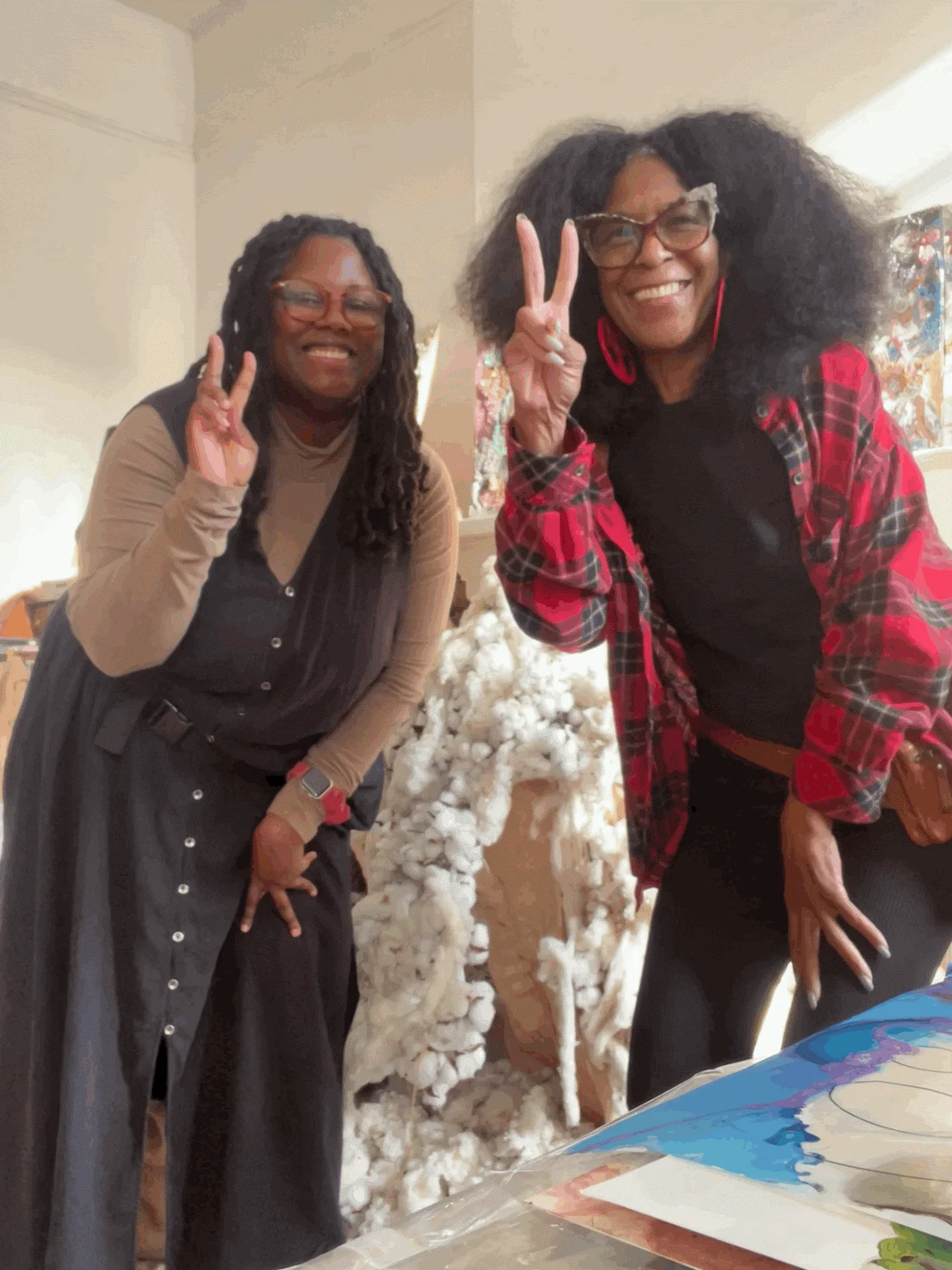
Kai Lumumba Barrow is a hero of the Black movement. She is unsung to those who have never had the great fortune to be mentored or in dialogue with her. I have had the opportunity for both and am here to sing her song. As a young organizer in New York with much to learn, I understood, even then, what a great teacher she could be. Her ability to debate and discuss with those of us who were young, ignorant, and arrogant, and not make us feel less than, while being on the losing side of discourse with her, is one of her amazing talents. She debated you and loved you at the same time. She could be angered and funny within seconds. She never cut you down, but she could cut you. All in the pursuit of making us better radicals and revolutionaries.
As a leader in 1990s New York City, Kai was instrumental in the growth of radical young leaders who entered movement politics. She is an artist, a mentor, and a thinker who helped sustain organizing for a decade in New York. From her work in the Black Panther Collective, the Mumia struggle, the Student Liberation Action Movement (SLAM!), and co-founder of Critical Resistance, to name a few, Kai was a reluctant focal point of Black and people of color struggles. Her home with Ashanti Alston on Beverly Road in Flatbush, Brooklyn, was a gathering space sometimes called the “Black House” where study and fellowship were a right of passage for many of us. Gathering under her and Ashanti’s tutelage was inspiring for people like me who wanted to organize our community. Her training in movement ran deep, with ties to the Black Panther Party, the New Afrikan organizations, socialist, abolitionist, and feminist struggles. I dare to say that without Kai's movement, New York would have looked a lot different. Dealing with misogyny and sexism in the movement was not a side issue, but a central focus of her pushing for women's leadership with radical politics. That is important to note because with Kai, politics was always in command. In a movement and world that marginalizes Black radical women, it is our hope that people begin to know more about her contributions, her life, and her struggle, as a gateway to not only the recent historical past but also towards what a radical future can look like.
—Kamau Franklin
In celebration of Women’s History Month, we want to sing the contributions that Kai continues to make to organizations today, such as Community Movement Builders, Southerners on New Ground, and Critical Resistance. This 10-minute oral history excerpt begins with Kai’s explosive introduction of the Black Nationalist parents who raised and shaped her into a revolutionary!
Kai Lumumba Barrow’s oral history was conducted on January 30, 2026, at her studio in the Central City neighborhood of New Orleans, Louisiana, with oral historian Dartricia Rollins as part of an oral history collection notes from the Black underground with veterans of the Black Liberation Movement. This excerpt has been lightly edited for clarity.
Dartricia Rollins: Who raised you?
Kai Lumumba Barow: I was raised by Black Nationalist parents. My mother's name was Ernestine, and my father's name was Wellington. Both of them have passed. And they raised me to be critical, to ask questions, to challenge authority in some respect, not them, but, you know, teachers who might try to diminish, you know, Black history, diminish what they were teaching. They allowed me to push back. Such as, when I was in fifth grade and going to school in Evanston, which was a suburb of Chicago.
We had moved to Evanston because my father was a college professor, we moved to Evanston from Chicago during this time period, and they were instituting, at that time, the pledge of allegiance to the US flag. And I refused to say that, because it was hypocritical to Black people, and I said that, you know. "It's hypocritical to Black people. I'm not going to say that."
And so I was punished, sent to the principal's office, and my parents came up to the school and said, “She's absolutely correct.” And so we worked it out so that every morning when that pledge would happen, I would go and sit with the vice principal and just basically shoot the shit, and then I would go back to class, you know. So my parents allowed me to do that kind of protest.
I started the Marcus Garvey Club. I fought for girls to be able to wear pants, you know. There was a lot of stuff going on, you know, you have to bring in poems, poetry readings, and stuff. And I brought in The Last Poets, "When the Revolution Comes” *laughter* She hated me so much. My fifth-grade teacher really hated me.
She asked, "What are the most important jobs that people can have?" I was like, "Farmers." *laughter* So I would get in trouble a lot, you know. But my parents were always supportive of me in that sense.
So, yeah, that was growing up, and we had, it was a time, you know, in the 60s, you know. So, as I said, my father was at Kendall College, which was a community college in Evanston, and at Northwestern, and working to get a Black Studies department, and helped a lot with students to set up the Black House, and my house always had a lot of radical students and refugees. South African refugees, Eritrean refugees, it was abuzz with a lot of Civil Rights folks, a lot of Black Nationalists were always in and around me, and I, you know, I thought we were friends. So I would listen a lot and pitch in commentary.
Prior to that, the Democratic National Convention came to Chicago when we lived in Chicago, and before moving to Evanston, the Democratic Convention came to Chicago in '68, and we were living in a co-op apartment in Hyde Park. And a lot of the people in the co-op were, you know, radicals, and so a lot of the yippies and Panthers stayed in different houses, and we went to the protest for a minute, and then my dad got us out of there. But when we got home, you know, people were coming back to the house, bleeding and beaten up. And I was like, “Oh, they hurt my friends,” you know, I was very--"The pigs!"
In the middle of the night, the police started shooting up the apartments looking for Dave Dillinger, who was one of the Chicago Eight. So I remember my dad coming into our room and my room and throwing me down on the floor, and, you know. So I had a feeling from early on, I did not like the police. I didn't understand also, the whole concept of prisons. I thought that was just savage! Just how can you take away somebody's freedom, you know. It just didn't make sense to me. And so I was easily seduced by revolution.
I read Malcolm X's Autobiography at 10, and I figured, “Oh, this is it for me. I'm a revolutionary. I'm gonna be a revolutionary.” I read the Communist Manifesto a few years later, and so I understood, you know, the world around me, and wanted to make a difference.
I also read Toni Morrison's The Bluest Eye, and I understood her using italics—the print piece, using italics as one voice, and, you know, Times, whatever the other is, the Serif, I guess, as the other voice. And I thought, this is brilliant, you know, I want to be an artist. So I decided, “Okay, I want to be a revolutionary and an artist.” And that I kind of, *unclear* I still want to be a revolutionary and an artist! Never wanted to be anything else. So, yeah, that was, that was where I came surrounded—
We went to Freedom Schools, and our parents would be in meetings, and we'd be learning martial arts or Hausa, and, you know, just really around culture and understanding that we were African people. We celebrated Kwanzaa, which initially we were like, "What is this zawadi *laughter* What? What are these gifts? We want Christmas!" But eventually, and then, "Why do we have to sit here and tell–what Black history people represent Uhuru," you know. But it was all part of the coming of age, and now I'm really grateful for it. But you know, that was how I was raised.
Just, you know, my parents started a freedom school that was for some years with some other folks in Chicago called Blyden. Edward Wilmot Blyden School, I don't remember, and my mom was the principal. And you know, they were working to instill—there was a whole network of independent Black schools at the time. So, you know, Third World Press is, what was their school? Sorry, I'm not the brain fog, but there was a bunch of independent schools nationally happening at the time. So, you know, all this stuff is gone, and it's really just, it was really beautiful to be this little girl with the fro, and people would say, "Black Power, Lil’ Sister." And I would respond, "Oh, Black Power!" Feeling myself, you know what I mean.
When they started painting the Wall of Respect in Chicago, it was around the corner from my grandmother's beauty shop, and I got to go and watch the art being made. And you know the artist would sometimes let us put a little stroke in there, so it's just like– "Oh, my," this is such a good life, you know, a lot of jazz. Yeah. So, that was how I grew up.
Kai Lumumba Barrow is a queer Black feminist, visual and performance artist, and the founder of Gallery of the Streets in New Orleans. For over 45 years, her work has been grounded in efforts to end structural oppression and state violence. Her work intersects theories and practices that transgress the borders of the arts, academic, and organizing worlds. She is also a co-founder of Critical Resistance and currently serves on their Community Advisory Board.
 Dartricia Rollins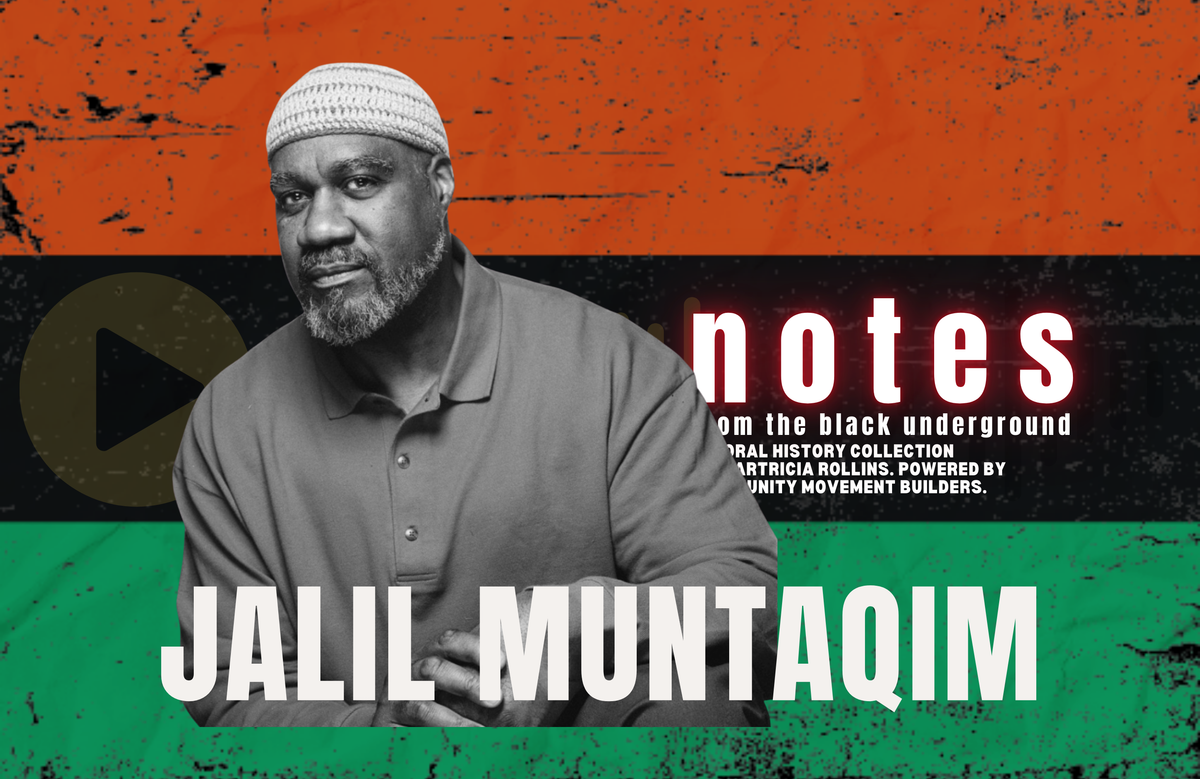
 Dartricia Rollins