

“One of the greatest forms of oppression is hunger.” — Black Panther Party (Sacramento Chapter).
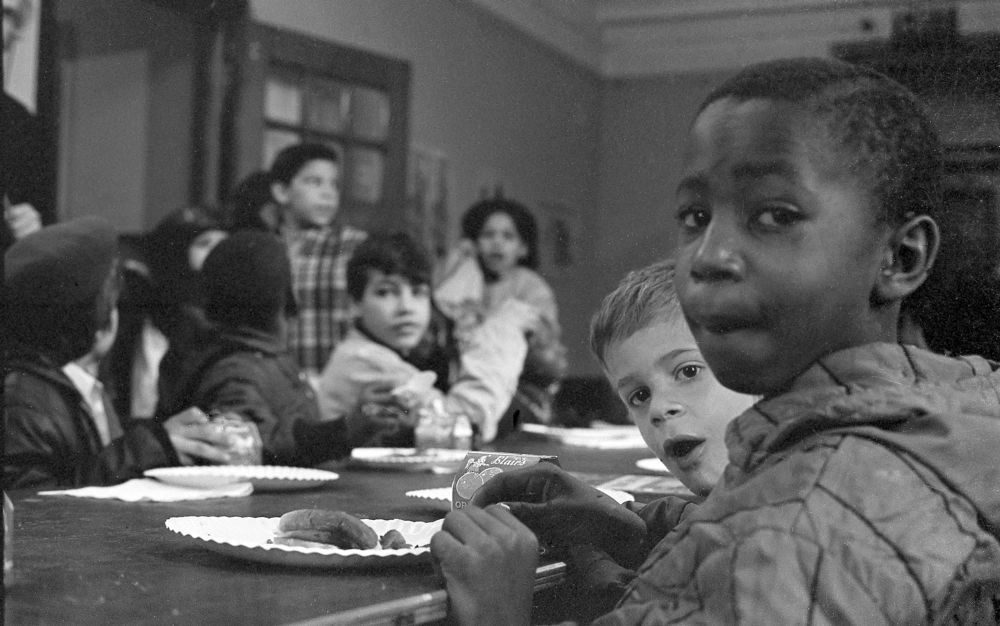
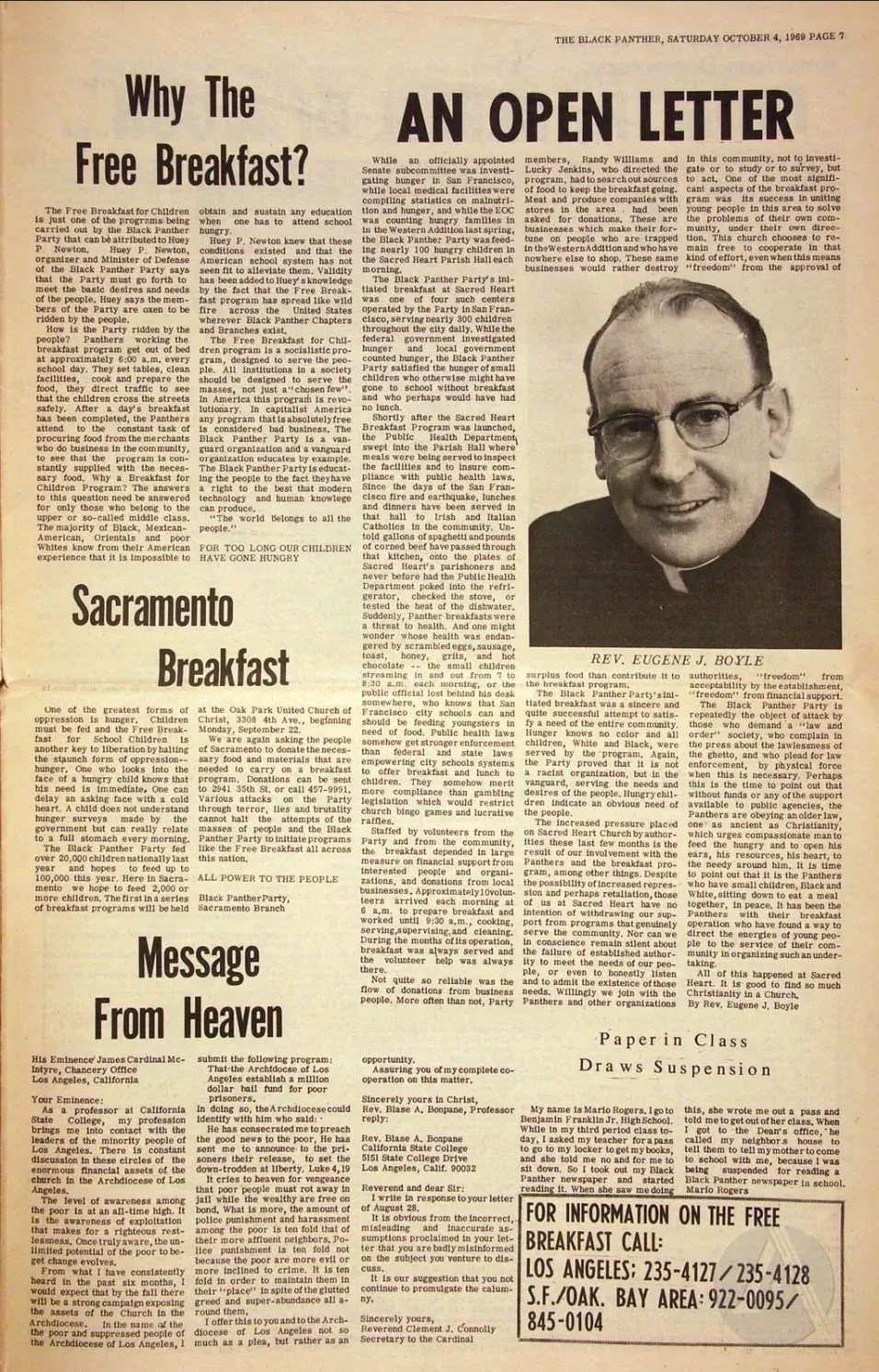
In January of 1969 in Oakland, California, the Black Panther Party (BPP) launched the Free Breakfast for Children Program (FBCP), one of its most impactful legacies. The program served the Black, Latino, AAPI, and poor white children in communities where they witnessed a rapidly growing number of hungry youth. It demonstrated a proof of concept for American schools, one the country hadn’t cared to fully develop: a free, nutritional breakfast for all children, no questions asked. There was no mandatory paperwork or dehumanizing proof of need. If a child showed up hungry, a plate was passed and served. It forever normalized the act of free breakfast for all kids.
In the first year alone, they organized and distributed around 20,000 free breakfasts. By the early 1970s, Panther chapters throughout the nation were providing nourishment to American children daily, and building a program that the federal government failed to scale. According to a California state hearing, the BPP was feeding more children in a day than the state itself.
Even when the government feeds children, it’s with a side of surveillance and shame.
Free meals at school were not entirely foreign to the United States. The National School Lunch Act of 1946 was passed after the government realized how many young men were gravely malnourished during WWII recruitment. Hunger only became a concern when framed as a national security issue. Even then, the response was limited and federal meal programs left many gaps in who they reached. By the time the Panthers launched their food program, the federal government had not provided widespread access to free breakfast, only lunch.
Food is foundational to how children grow, think, and move through the world. Research from the US Department of Agriculture shows that food insecurity in youth is connected to higher rates of emotional challenges, difficulty concentrating, lower academic performance and decreased sense of self-worth. It affects the body, but also shapes the way children learn and understand their place in this world.
The Panthers' program modeled a functional infrastructure that addressed an immediate need directly. Simultaneously, it exposed where state policies were not doing enough for the people, particularly in growing metropolitan areas. What the FBCP built became an embarrassment to the government and eventually a target. Under J. Edgar Hoover, the same man who claimed cannabis made Black people feel "as good as white men," the FBI moved to tear down the Panthers' work through its COINTELPRO program. Misinformation was spread to parents whose children relied on free breakfasts; claiming the food was unsafe and contained harmful substances and disease. Police raided breakfast services, destroying food and supplies. This ultimately contributed to the program’s decline by the late 1970s, alongside the dismantling of the Party itself.
Their prototype galvanized the government to finally expand its own School Breakfast Program (SBP) across the country, making it permanent in 1975. But unlike the Panther’ model, access was conditional. Children took on the burden of proving eligibility, but they also took on the emotional weight and shame of what receiving free meals meant for their identity. Through lines, paperwork and restrictions, the system segregates children socioeconomically during mealtime.
Being in a state of hunger is one form of pain. Being marked as poor is another.
For many children, the school meal program came with a side of embarrassment and isolation. In some schools, students were and likely still are divided into “free” and “paid” lines. Second servings sometimes were denied to those in the program. Those who paid reduced fees, or didn’t have money that day, often waited until the end of the line for whatever was left, like PBJ sandwiches in place of a full square meal. Others recall that even educators and administrators at times treated children differently based on who was receiving, or not receiving free meals.
Some school districts adopted the Panthers’ method of free universal meal programs for all children attending their schools. In those spaces, stigma decreased and some children reported not even noticing who paid and who didn’t. The key piece the BPP understood was that feeding the youth, regardless of socioeconomic positioning, is a foundation building block for life and for survival.
As cuts to the Supplemental Nutrition Assistance Program (SNAP), Women, Infants, and Children (WIC), and money for local food banks continue to ripple through the U.S., they threaten that foundation and direct access to free and reduced-priced school meals. According to the Food Research and Action Center, these cuts also limit fresh food from local sources, and tightened qualifications. Some estimates claim that 18 million children will be subject to tighter food program eligibility.
Across the nation, communities and individuals are already finding ways to close the food gap. We’re seeing mutual aid, local farmers’ markets, restaurants and informal networks working to embody the universal free meal logic the Panthers designed. While these efforts may seem insignificant compared to large-scale policy shifts, they prove to us that when people organize, people get fed.